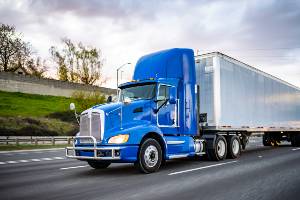
There’s no reliable single number that answers “what’s the average 18-wheeler settlement.” Anyone searching for that figure is usually trying to get a sense of what their own case might be worth, and the honest answer is that truck accident claims vary enormously based on injury severity, available insurance coverage, and the specific facts of the crash. What follows is a breakdown of the factors that a Lafayette truck accident lawyer may use to assess the value of a claim.
It’s worth being direct about why this question is so hard to answer honestly. Marketing materials across the legal industry sometimes cite eye-catching settlement or verdict figures, and it’s tempting to treat those as a benchmark. But a single headline number, pulled from a case with its own specific injuries, insurance coverage, and liability facts, tells you almost nothing about what a different case involving different people, a different crash, and a different set of injuries might be worth. The factors below provide more useful context than a general average.
Why there is no reliable “average” settlement
Publicized settlement figures may disproportionately reflect larger, more severe cases, which can skew an “average” upward and make it unreliable for predicting an individual case. At the other end, minor-impact claims with limited injuries resolve for far less. Averaging across that entire range produces a number that doesn’t meaningfully describe any specific case, including yours. What actually determines value is a combination of injury severity, available insurance coverage, liability clarity, and the strength of the evidence connecting the crash to your economic and non-economic damages.
There’s also a selection-bias problem with any published average: the cases that get publicized, whether through news coverage or firm marketing, may disproportionately involve larger or more serious cases. Routine, more moderate settlements rarely make headlines, which means the sample of publicly visible numbers is skewed from the start. A meaningful estimate of what a specific case might be worth has to come from the specific facts of that case, not from an average built on an unrepresentative sample.
"I have used Galloway Jefcoat a few times and have always been very satisfied. Furthermore, all of the people who work there are very professional, nice, and courteous."

Economic damages: medical costs, future care, income loss, and earning capacity
Economic damages are the calculable financial losses connected to the crash: past and future medical expenses, lost income during recovery, and diminished earning capacity if the injury affects long-term work ability. Serious truck crashes often involve significant medical costs given the physical forces involved in a collision with a vehicle many times the weight of a passenger car, and future care needs, when applicable, require input from treating physicians or life-care planners to estimate accurately. This category may be one of the more concrete parts of a claim’s value, because it’s built from bills, wage records, and medical documentation rather than judgment calls.
It’s worth noting that Louisiana has recently changed how certain past medical expenses are calculated, including limitations based on amounts actually paid or owed for treatment in some circumstances. This represents a change in how certain past medical expenses may be evaluated, and it affects how economic damages should be documented and presented going forward.
Non-economic damages and the severity/permanence of injuries
Non-economic damages cover pain, suffering, and the broader impact an injury has on someone’s life, separate from the calculable financial losses. Louisiana law allows recovery for these damages, and their scope typically correlates with injury severity and permanence: a fully recovered soft tissue injury may be evaluated differently than a permanent impairment that affects someone’s daily functioning for the rest of their life. This is inherently a more judgment-driven category than economic damages, which is part of why comparing headline settlement figures across different cases is so unreliable.
Establishing the connection between the crash and an injury’s ongoing effects has also become more demanding under recent changes to Louisiana law. Where a presumption of causation previously applied in some circumstances based on a plaintiff’s lack of a prior history of the condition, Louisiana law now provides that the lack of such a history does not create a presumption of causation, making medical evidence important in establishing whether a symptom or condition was caused by the crash. This makes thorough, well-documented medical evidence more important than ever in supporting a claim for non-economic damages.
"As a client of Galloway Jefcoat for over two years I want to take a minute to say how much I appreciate the team handling my case."
Commercial insurance coverage and multiple responsible parties
Truck crashes often involve substantially more insurance coverage than a typical passenger vehicle collision, which may provide greater available coverage in some serious truck accident claims. Federal regulations set minimum financial responsibility levels for commercial carriers based on vehicle weight and cargo type, with higher minimums required for larger trucks and hazardous materials. Actual coverage often exceeds these federal minimums, sometimes significantly, through primary policies and additional excess or umbrella layers that aren’t always obvious from a public filing.
Confirming the actual coverage available in a given case may require additional investigation. A commercial carrier’s public filings typically show only the minimum required layer, not any excess or umbrella coverage sitting above it, and identifying those additional layers often requires formal discovery requests once a claim is underway. This is one reason an early, thorough investigation may be important in a serious truck accident case.
Liability in a truck crash can also extend beyond the driver. Depending on the facts, a claim may potentially involve the trucking company, a freight broker, a shipper responsible for cargo loading, a maintenance provider, or in some cases a parts or vehicle manufacturer if a mechanical defect contributed to the crash. Whether any of these parties actually bears responsibility depends entirely on the specific facts of the crash, the driver’s employment or contractor status, and what caused the collision. This shouldn’t be assumed in any particular case; it’s a possibility worth investigating rather than a given.
"Great experience, from day 1 I felt like I finally had someone on my side and that feeling didn't leave me for 1 single moment."
Evidence unique to truck crashes that can affect value
Commercial trucks generate documentation that passenger vehicles typically don’t: electronic logging device data showing hours of service, maintenance and inspection records, driver qualification files, and sometimes onboard event data recorders capturing details about speed and braking in the moments before a crash. This evidence can be important, but it’s also frequently subject to retention schedules and may be lost or overwritten if it isn’t preserved promptly. Acting promptly to request preservation of this evidence is one of the more time-sensitive steps in a serious truck accident case.
A driver who was over their hours-of-service limit, or a carrier with a documented pattern of deferred maintenance, may affect how a case is evaluated, but only if that evidence is identified and preserved while it remains available. Sending a formal evidence-preservation letter to the carrier shortly after a crash is a standard early step precisely because these records don’t always get retained voluntarily once litigation becomes likely.
How comparative fault can change recovery
Louisiana applies a comparative fault framework under Civil Code article 2323, and recent legislative changes have made this a more consequential issue than it used to be. Under current law, a claimant found 51% or more at fault for a crash is barred from recovery entirely, while fault of 50% or less results in a proportional reduction rather than a bar. Insurers in truck cases may investigate whether comparative fault applies, because the percentage of fault assigned to the injured party can affect the amount recoverable. This makes early evidence preservation and a clear account of how the crash happened especially important.
Because the consequences of crossing the 51% threshold are so severe under current law, comparative fault can become an important issue early in a truck accident claim. For example, a finding of 40% fault would result in a proportional reduction, while a finding of 51% fault would bar recovery under the current law. That makes a thorough, well-documented account of how the crash actually happened an important part of a truck accident claim.
Settlement versus trial value
A case’s settlement value and its potential trial value aren’t always the same number, and the gap between them is influenced by the strength of the evidence, the clarity of liability, and each side’s assessment of risk. Settling avoids the time, expense, and uncertainty of trial; going to trial may result in a different outcome but carries its own risks and costs. Neither path is automatically better, and the right choice depends heavily on the specific facts and evidence of a given case.
This is ultimately a risk calculation made with incomplete information on both sides. An insurer weighing a settlement offer is estimating what a jury might do with the case; an injured claimant deciding whether to accept an offer is weighing a known amount now against an uncertain outcome later. Neither side can predict a jury’s decision with certainty, which is exactly why the strength of the underlying evidence, not just the severity of the injury, plays such a large role in how a case ultimately resolves.
Why early offers may not reflect the full claim
Insurers sometimes extend an early settlement offer before the full scope of an injury, future treatment needs, or available insurance coverage is understood. An offer made early in a case is based on limited information by definition, and accepting a settlement generally requires resolving the claim and may prevent seeking additional compensation later, even if it turns out the injury was more serious or the available coverage was greater than initially known. This is one of the more consequential decisions in any injury claim, and it’s difficult to make well without a full picture of both the medical prognosis and the insurance landscape.
Early offers can be genuinely tempting, particularly for someone facing mounting bills and lost income in the weeks after a serious crash. That pressure is real, and it’s exactly what makes evaluating an early settlement offer particularly important. Understanding the difference between an offer that reflects a fair assessment of a fully-documented claim and an offer made before the claim is fully documented is difficult to do without experience reviewing these cases.
What information an attorney needs to evaluate a truck claim
A meaningful evaluation of a truck accident claim typically requires the police crash report, complete medical records and billing, wage documentation if work was missed, and information identifying the trucking company, driver, and any other potentially responsible parties. The sooner this information is gathered, and the sooner steps are taken to preserve time-sensitive evidence like electronic logging and inspection records, the more information may be available to evaluate the claim.
Beyond the basic documentation, an attorney evaluating a serious truck claim will typically also want to understand the full insurance picture, including any excess or umbrella coverage, the driver’s hours-of-service history around the time of the crash, and whether the carrier has any documented history of safety violations. None of this is necessary for every case, but for a serious injury claim, a thorough early investigation may provide a more informed assessment of the claim than a generic average.
"Galloway Jefcoat helped me at a time when I felt lost and taken advantage of by my employer."